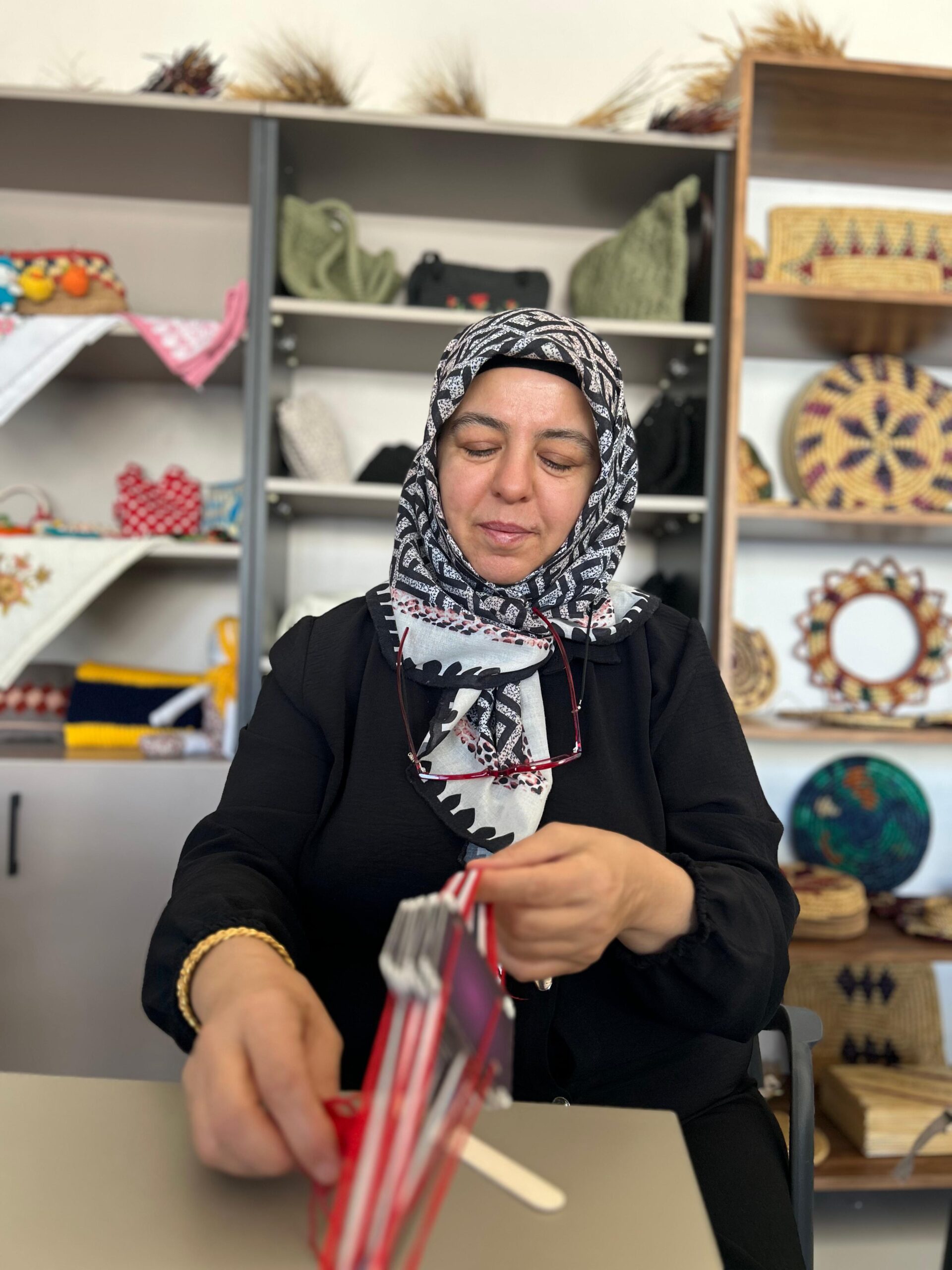
A Brief History of Çarpana Weaving
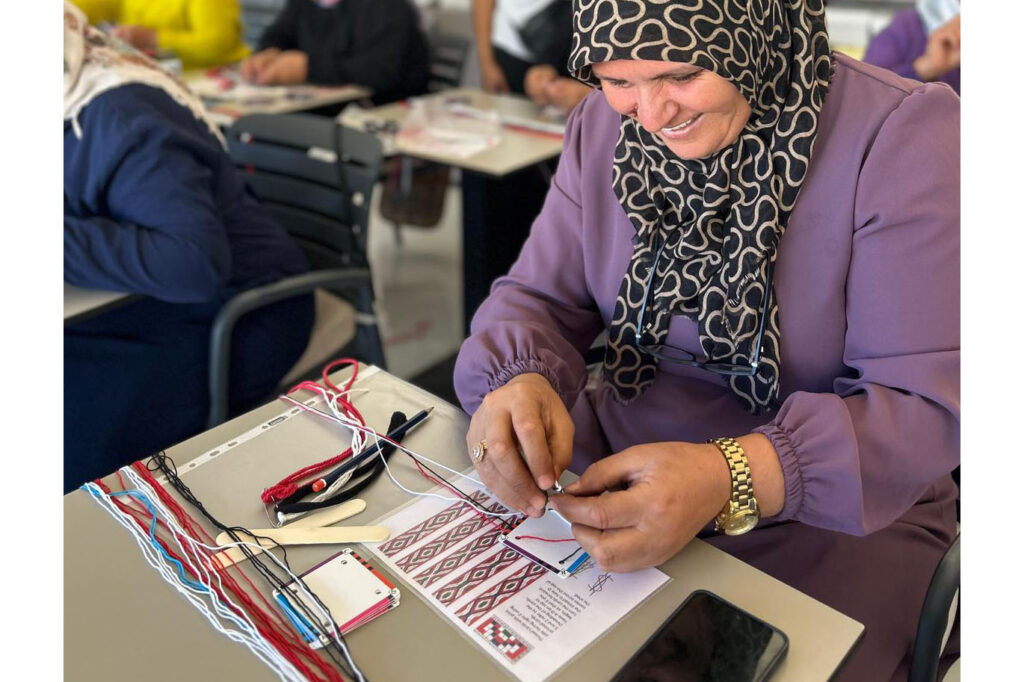
Çarpana weaving, like Cimem weaving, is one of our registered geographical indications and one of Anatolia’s oldest hand-weaving techniques. Its origins trace back to the weaving traditions shaped along the migration routes extending from Central Asia to Anatolia.
This technique held an important place in the daily lives of nomadic and semi-nomadic communities, as it enabled the production of narrow, long, and durable woven bands used for various functional purposes over centuries.
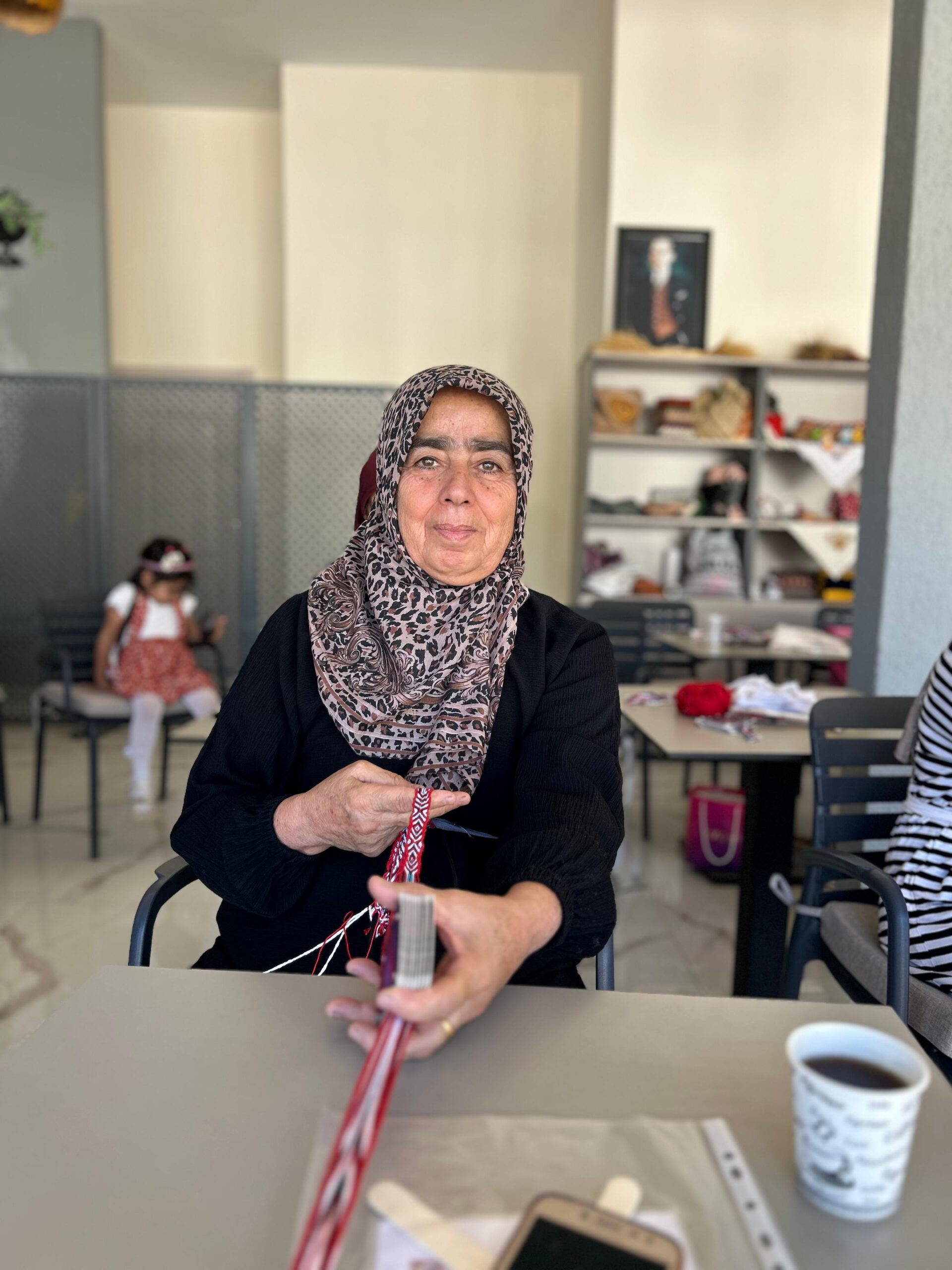
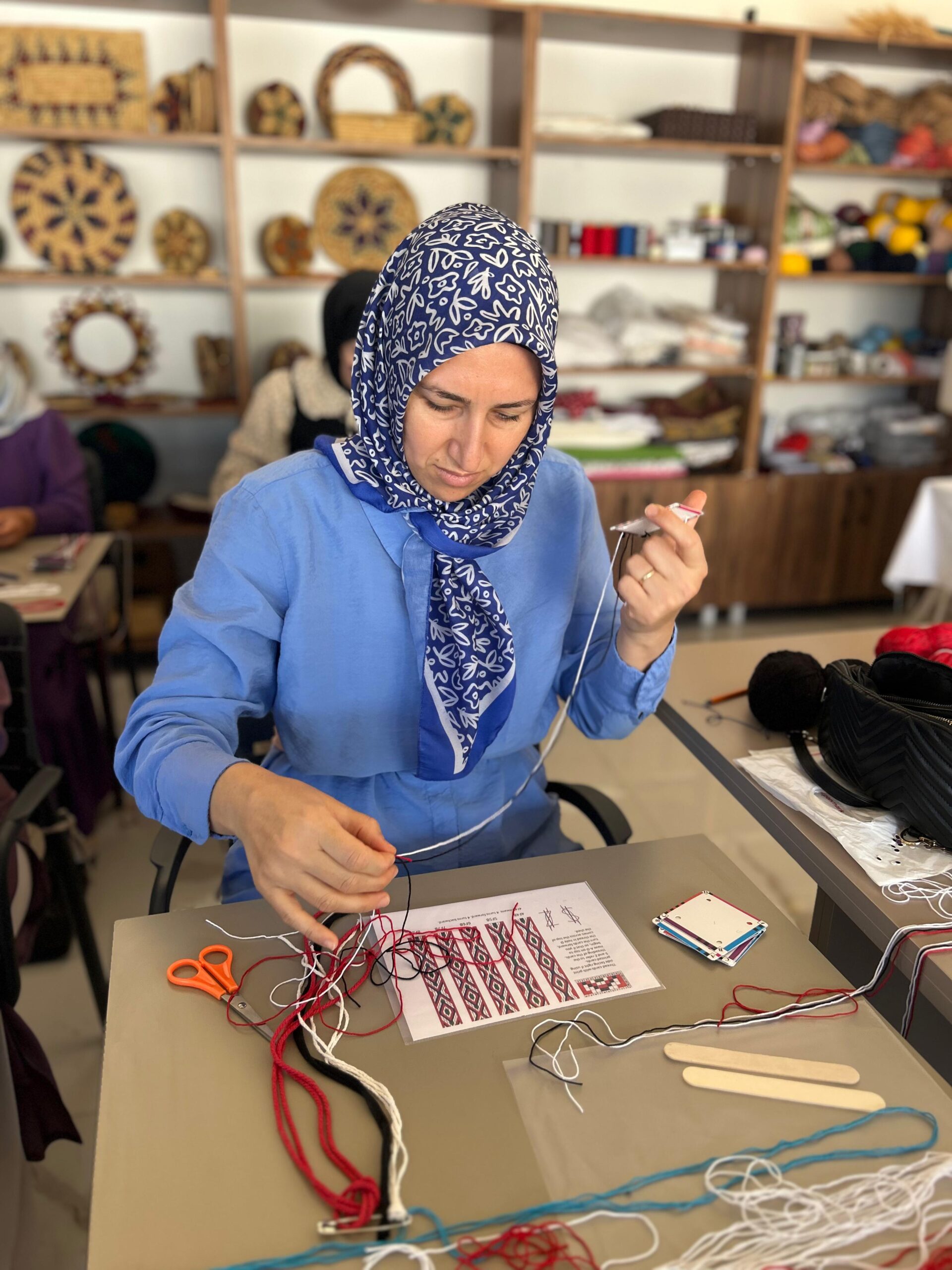
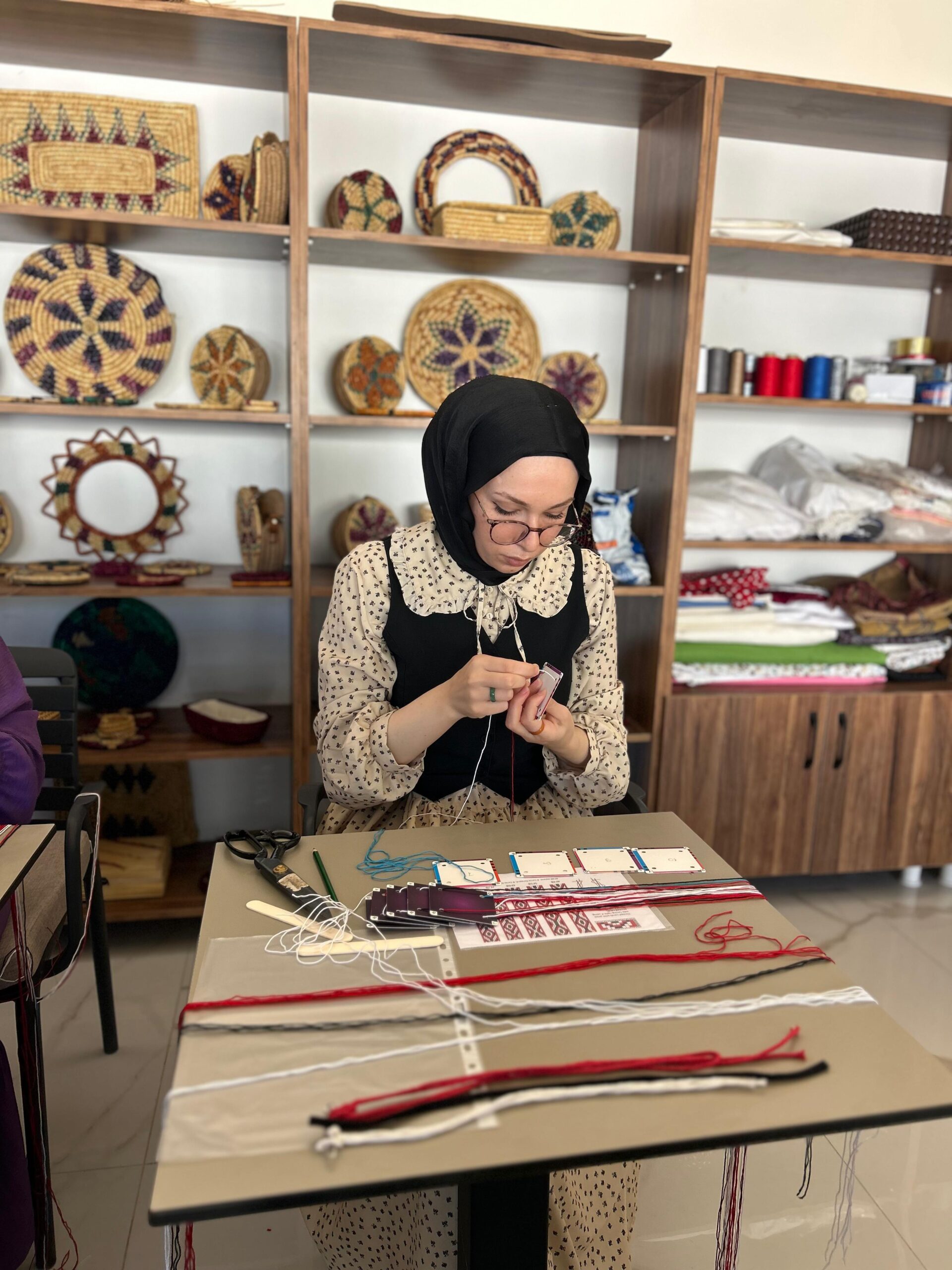
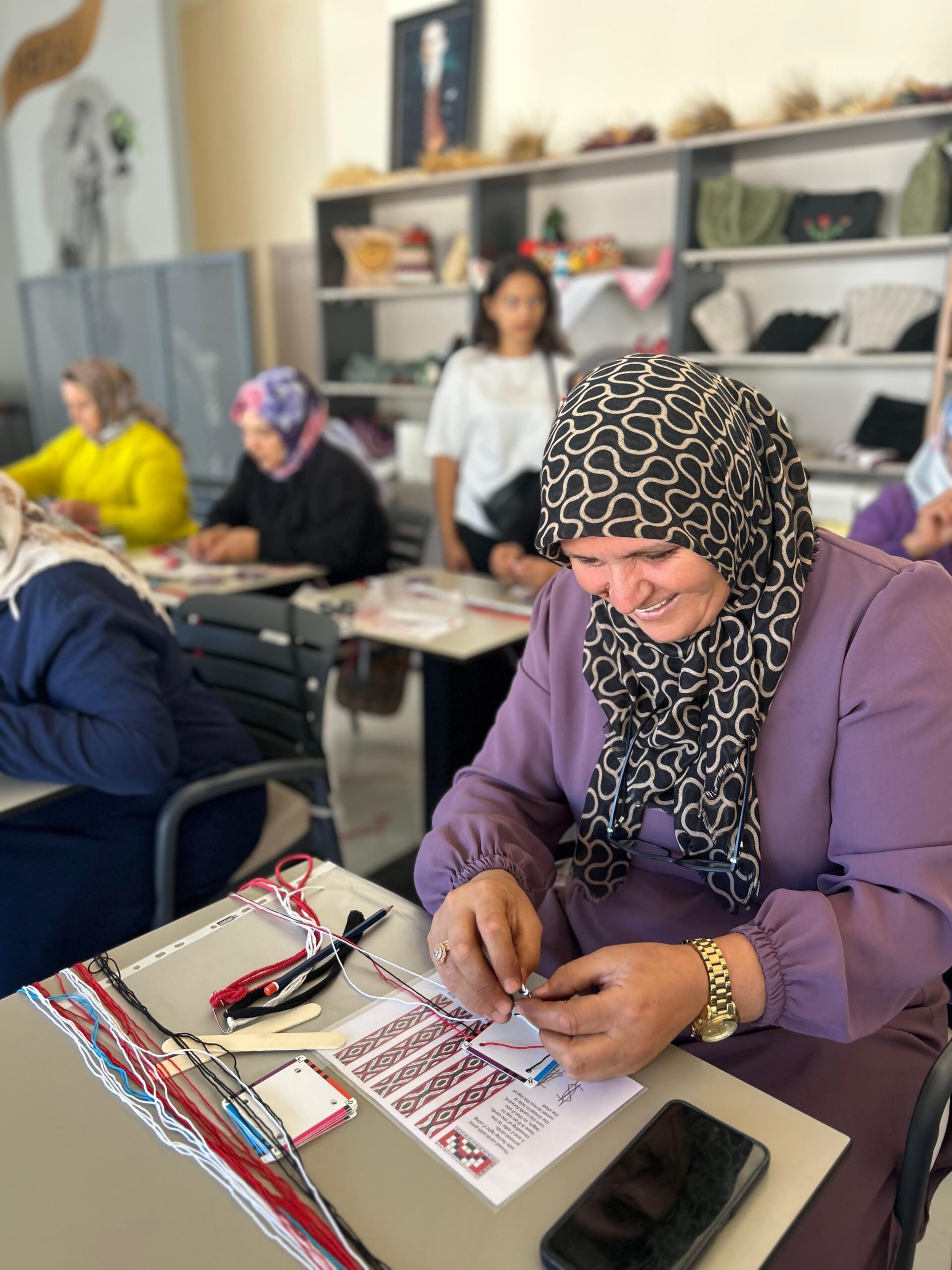
Çarpana weaving takes its name from the weaving tablets themselves — tools produced from materials easily accessible to the weaver. These tablets, made from materials such as hard leather, thin wood, bone, ivory, or cardboard, are thin, smooth on both sides, large enough to be comfortably held with two hands, and feature holes at their corners through which threads pass.Multiple tablets are used during weaving, as the width of the woven piece is determined by the number of tablets employed. Although they may be produced in square, triangular, or polygonal forms, the most commonly used type is the four-cornered, four-holed tablet.
Throughout history, Çarpana weaving has been used in the creation of belts, sashes, ties, straps, and decorative elements. These woven pieces were not only functional objects but also vehicles of cultural expression. Through motifs and color choices, meanings such as belief systems, protective symbols, social status, and belonging were transmitted from generation to generation.
During the Ottoman period, Çarpana weaving found its place in both palace and folk weaving traditions and diversified across different regions of Anatolia with unique motif and color interpretations. In the Republican period, it was documented within the framework of traditional handicrafts and carried into the present through educational institutions and master artisans.
Today, Çarpana weaving is recognized as intangible cultural heritage, and this ancient technique continues to live on through contemporary interpretations and artistic production.
Melek Baransel Günday
(Erzurum, 1961)
Atatürk University
Department of Traditional Turkish Handicrafts – Master’s Degree
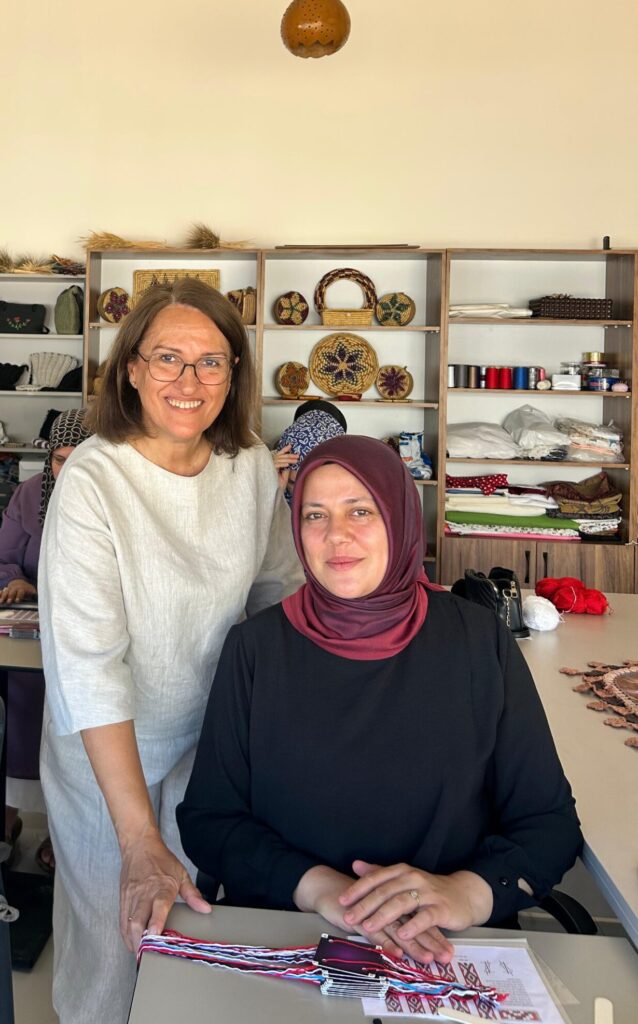
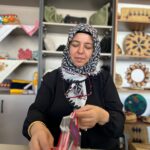
I am a Çarpana weaving artist affiliated with the Ministry of Culture. I carry responsibility for the sustainability of the Çarpana weaving tradition, recognized as part of our intangible cultural heritage. Through trainings, presentations, and workshops, I work to pass this exceptional craft on to young people and future generations.
My connection with art dates back to my childhood — to a visit to Topkapı Palace with my family during my primary school years. What I saw and heard at that age led me to internalize art deeply. Although studying art was my lifelong goal, life directed me along different paths. I received education in another field, worked, married, and raised two children. Yet despite everything, I never abandoned art.
In life, everyone progresses in their own time and under their own conditions. I live in my own time. I completed my undergraduate degree at the age of thirty-eight as the top graduate of my class, and I completed my master’s degree at sixty-two. I compete only with my own time — through art.
Weavings are among the most sincere forms of expression that convey the silent written language and emotions of Anatolian women. The rich cultural heritage of Anatolia — the traces of civilizations that have passed through these lands, tales, epics, myths, and rituals — forms the primary source of inspiration for my artistic production. By referencing the cultural and traditional codes embedded in the weavings rooted in my heritage, I create original designs aimed at making our identity and story visible on both national and international platforms.
Our Training Day
The Çarpana weaving training organized under the umbrella of our cooperative — and marking the first external training received in Hatay — represented not only the transfer of technical knowledge, but also the revival of shared memory, patience, and the culture of producing together.
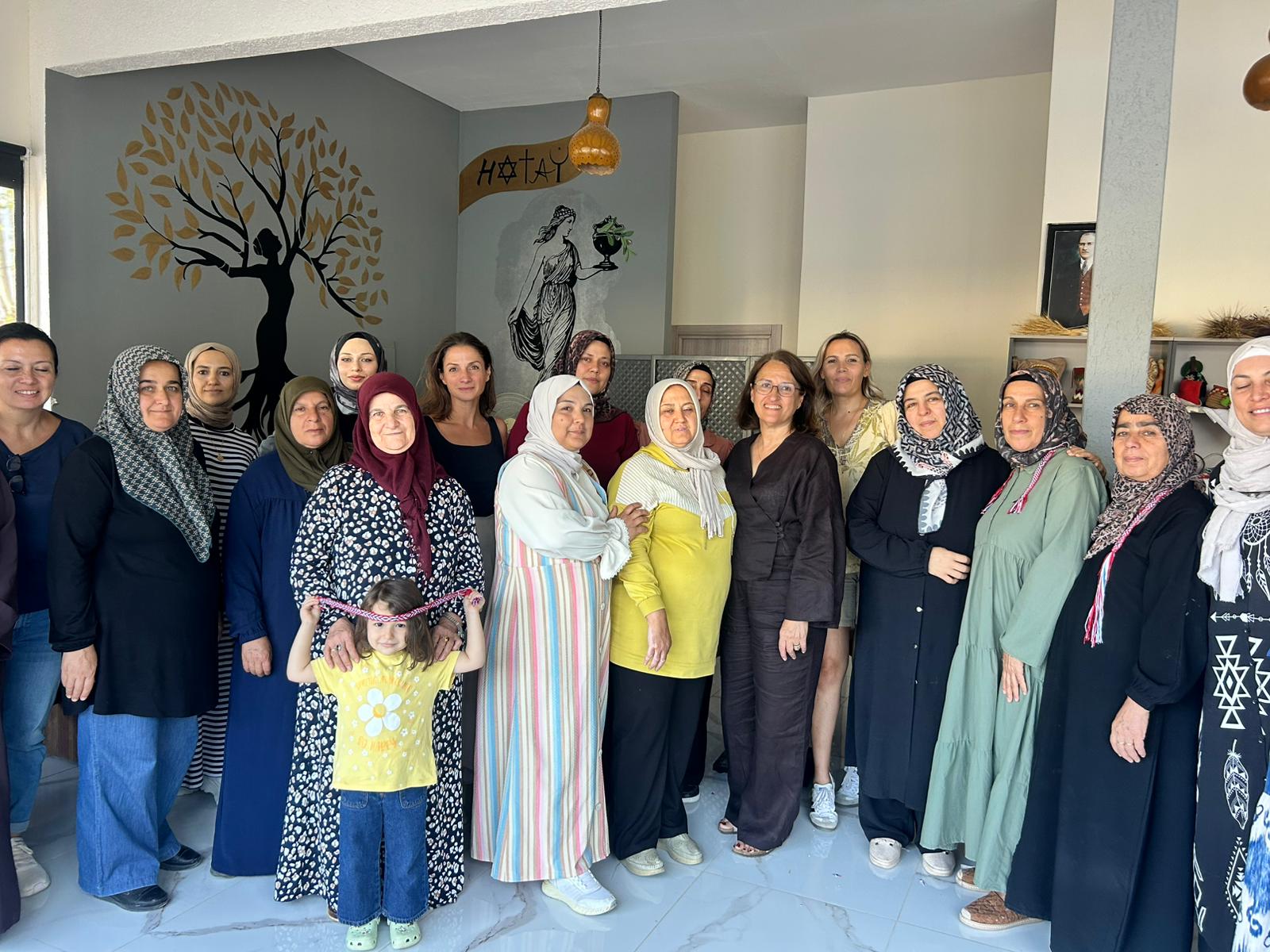
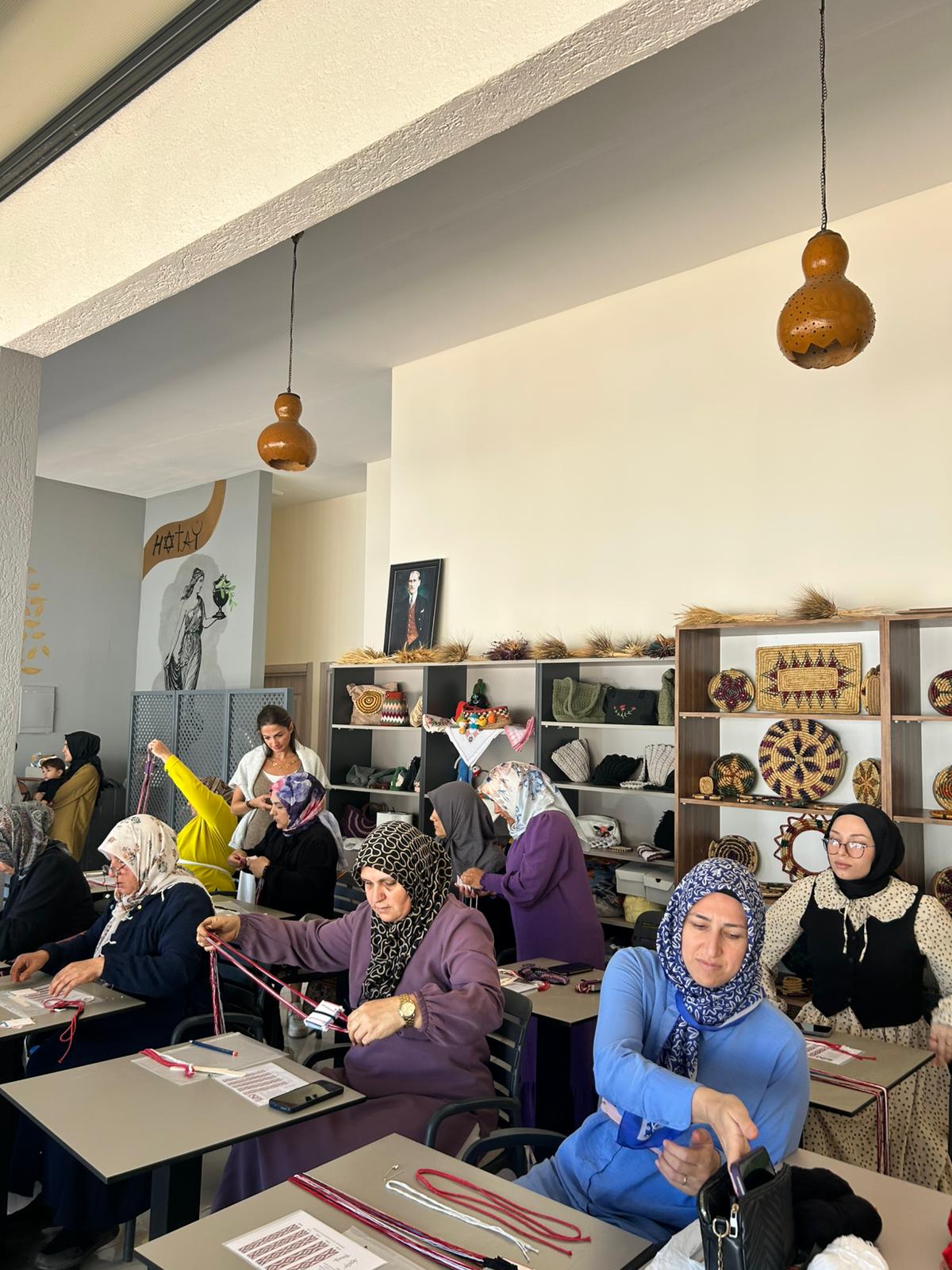
In September 2025, Aslı Filinta and several members of BİZ Collective gathered at the BİZ Cooperative in Hatay, where Aslı Filinta serves as a founding member. Our instructor, Melek Baransel Günday — a Çarpana Weaving Artist recognized within the Ministry of Culture and Tourism in the field of Traditional Turkish Arts and Contemporary Weavings — guided the training process with her approach of presenting Çarpana as a living body of knowledge. Aslı Pelvanlar, another collective member who has long dedicated her efforts to sustaining Çarpana weaving, also accompanied the training.
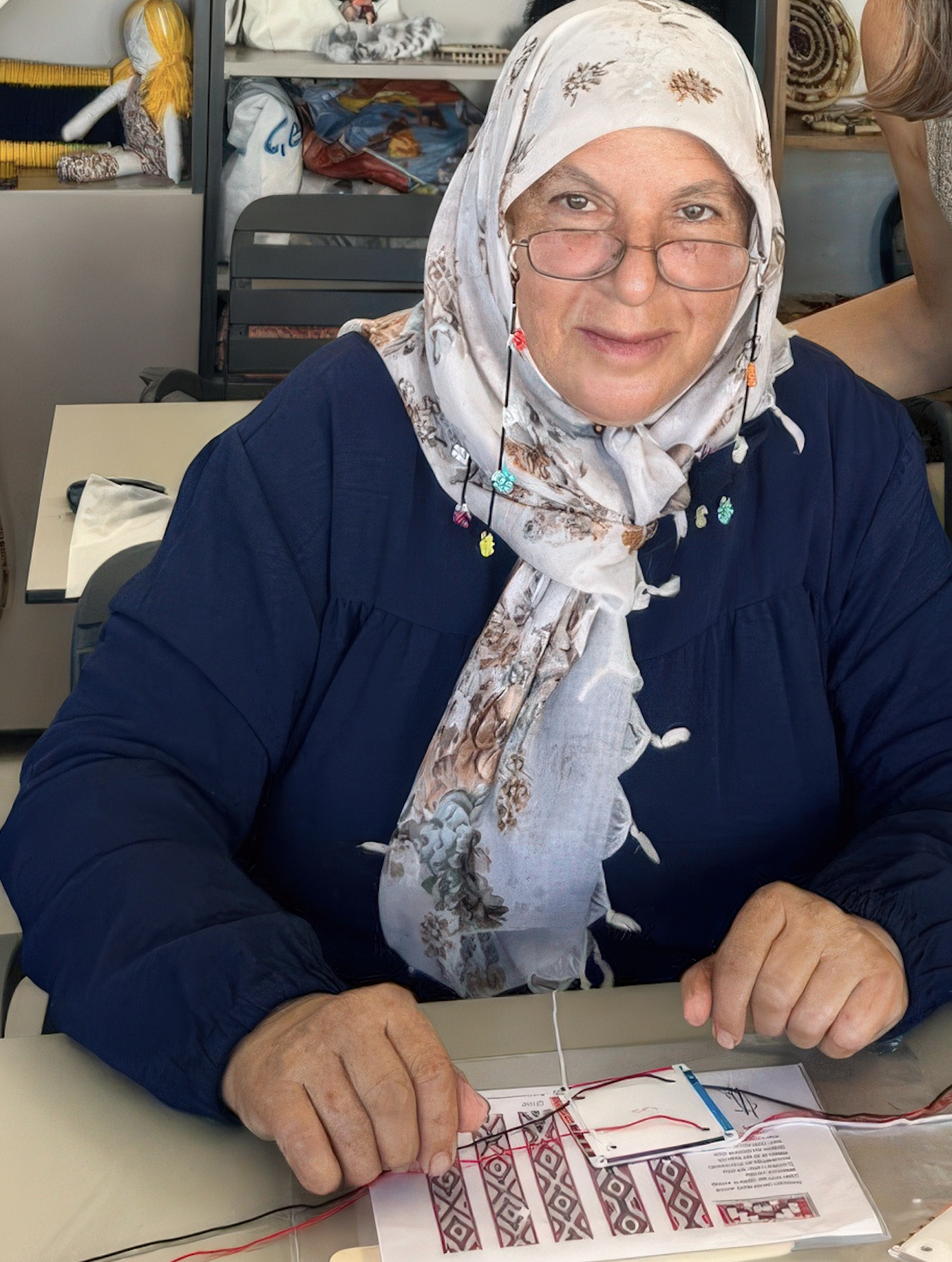
The training was organized not only for cooperative members but was open to anyone in the district who wished to learn Çarpana weaving.
Throughout the training, the strength of collectivity manifested itself not only in the sharing of knowledge, but also in solidarity and togetherness. Various members of the collective contributed in different ways — some assisted in sourcing materials, while others offered moral and motivational support simply through their presence, becoming an integral part of the gathering. Working together, supporting one another, and growing stronger collectively became among the most visible outcomes of the training.
The participation of women from every generation, the Hatay delicacies they brought from their homes and shared, the tea brewed together, the table set collectively, and the long conversations all served as reminders of Anatolia’s collective spirit and our shared roots. In a short time, the workshop transformed from a mere training space into a place of shared presence and mutual nourishment.
At the end of two long days filled with many emotions, Hatay was left behind with beautiful memories, newly trained Çarpana weavers, strengthened bonds, and a renewed hope for production that had begun to sprout once more.
In many ways, this gathering demonstrated that Çarpana remains a living, transformative, and unifying body of knowledge — and that it grows most powerfully when created together.
-
- Çarpana Eğitimlerimiz
-
- Çarpana Eğitimlerimiz
-
- Çarpana Eğitimlerimiz
-
- Çarpana Eğitimlerimiz
-
- Çarpana Eğitimlerimiz
-
- Çarpana Eğitimlerimiz
-
- Çarpana Eğitimlerimiz